Behind the Scenes: Building the Perfect Setup
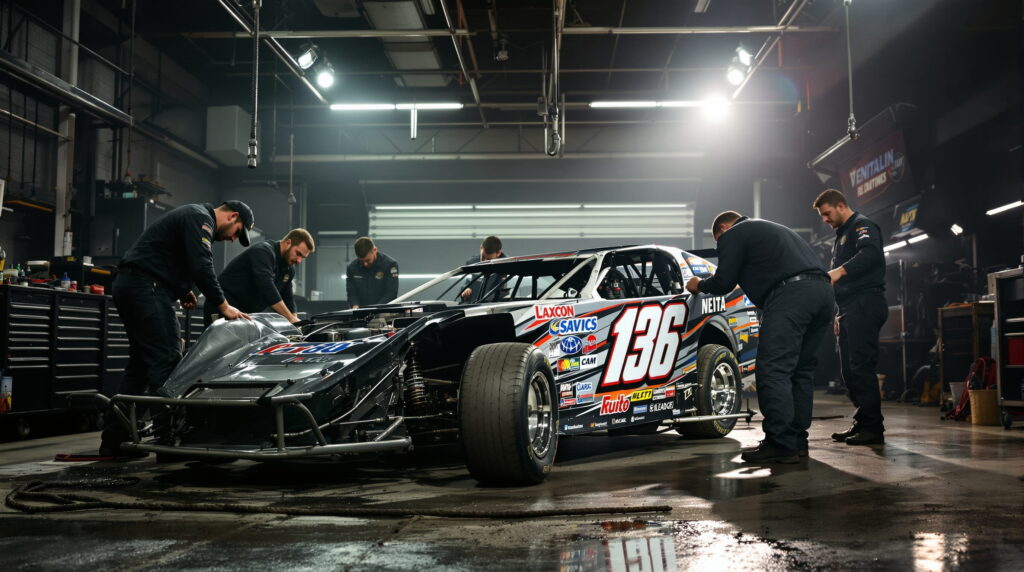
Take an inside look at how the crew prepares the car for each track condition, from shock tuning to tire selection. Racing happens on the asphalt, but victory is built in the garage. Hours before the green flag drops, a dedicated team of engineers and mechanics works tirelessly over the vehicle. They analyze historical data, inspect the tarmac, and adjust the machinery to extract every possible ounce of performance.
This precise preparation separates the podium finishers from the rest of the pack. A powerful engine means nothing if the chassis cannot translate that horsepower into forward momentum. If you want to understand how a race car achieves maximum speed and grip, you need to examine the meticulous work happening off the track. Preparing a car for competition involves a complex web of decisions, where changing one variable immediately impacts three others.
Shock Tuning for Performance
Suspension dictates how a vehicle behaves during acceleration, braking, and cornering. The shocks control the weight transfer of the car, keeping the tires planted firmly on the racing surface. Tuning these components is a delicate balancing act that requires both mathematical precision and driver feedback.
Compression and Rebound
When a car hits a bump or leans into a corner, the shock compresses. When the track flattens out, the shock extends back to its resting state, known as rebound. Mechanics can adjust both the compression and rebound rates independently.
A crew will dial in higher compression stiffness on a smooth racing circuit. This prevents the car from rolling too much in the corners, maintaining a stable aerodynamic platform. The air flows cleanly over the wings, generating maximum downforce.
However, a stiff setup becomes a nightmare on a bumpy circuit. The suspension will not absorb the impacts, causing the tires to skip over the pavement. In these situations, engineers soften the shocks. The suspension soaks up the bumps, keeping the rubber pressed against the road and maintaining mechanical grip.
Finding the Sweet Spot
Teams rely heavily on telemetry data to find the optimal shock settings. Sensors record the suspension travel hundreds of times per second. Engineers review this data on laptops, looking for moments where the car bottoms out or loses traction. They cross-reference these graphs with the driver’s feedback. If the driver complains about understeer mid-corner, the crew might adjust the front rebound to shift the weight distribution and give the front tires more bite.
The Art of Tire Selection
Tires represent the only physical connection between the car and the track. No matter how perfectly the shocks are tuned, the wrong tire choice will ruin a race strategy.
Compounds and Temperatures
Race tires come in various compounds, generally categorized as soft, medium, and hard. A soft compound provides massive amounts of grip. The rubber physically melts into the microscopic crevices of the track surface. The tradeoff is durability. Soft tires degrade quickly, requiring earlier pit stops.
Hard compounds offer the opposite characteristics. They lack the ultimate pace of a soft tire but can withstand long stints on the track. Crews must look at the total race distance, the abrasiveness of the track surface, and the ambient temperature to decide which compound will yield the fastest overall race time.
Managing Pressures
Tire pressure is another critical variable. Teams fill the tires with nitrogen instead of standard air because nitrogen is less susceptible to pressure changes caused by heat. As the car completes laps, the friction generates massive heat, causing the pressure inside the tire to rise.
Crews intentionally start the race with lower pressures. They calculate exactly how much heat the track will generate and aim for a specific “hot pressure.” If the starting pressure is too high, the tire will balloon mid-race, reducing the contact patch and causing a severe loss of grip.
Adapting to Track Conditions
A track is a living, breathing entity. The conditions present during morning practice rarely match the environment of the afternoon race. Crews must constantly adapt their setups to chase the evolving racing surface.
Weather Changes
Cloud cover can drop the track temperature by several degrees in a matter of minutes. Cooler asphalt offers less grip, forcing the crew to adjust the tire pressures or tweak the wing angles to compensate.
Rain introduces a completely different set of challenges. Water acts as a lubricant between the rubber and the road. To prevent hydroplaning, teams switch to treaded wet tires designed to channel water away from the contact patch. They also soften the suspension drastically and increase the ride height. A wet setup aims to generate as much mechanical grip as possible, as the slower speeds reduce the effectiveness of the aerodynamic components.
Track Evolution
As more cars circulate the track, they leave behind a layer of rubber. This process, known as “rubbering in,” generally increases the grip levels on the ideal racing line. A setup that felt loose and unpredictable in the first practice session might feel perfectly locked down by the time qualifying begins. The crew anticipates this evolution, building a setup that will come alive precisely when it matters most.
Crossing the Finish Line with Confidence
Building the perfect setup is a continuous cycle of preparation, execution, and adaptation. Every adjustment to the shocks and every decision regarding tire compounds plays a critical role in the final result. The mechanics and engineers work in the shadows, but their expertise dictates the pace on the track.
By understanding the intricacies of car setup, racing fans can appreciate the deep strategic battles happening on pit lane. Next time you watch a race, pay attention to the changing weather and the wear on the tires. You will see firsthand how the crew’s behind-the-scenes work directly influences the fight for the checkered flag.