Engineering Excellence: New Shock Package Tested
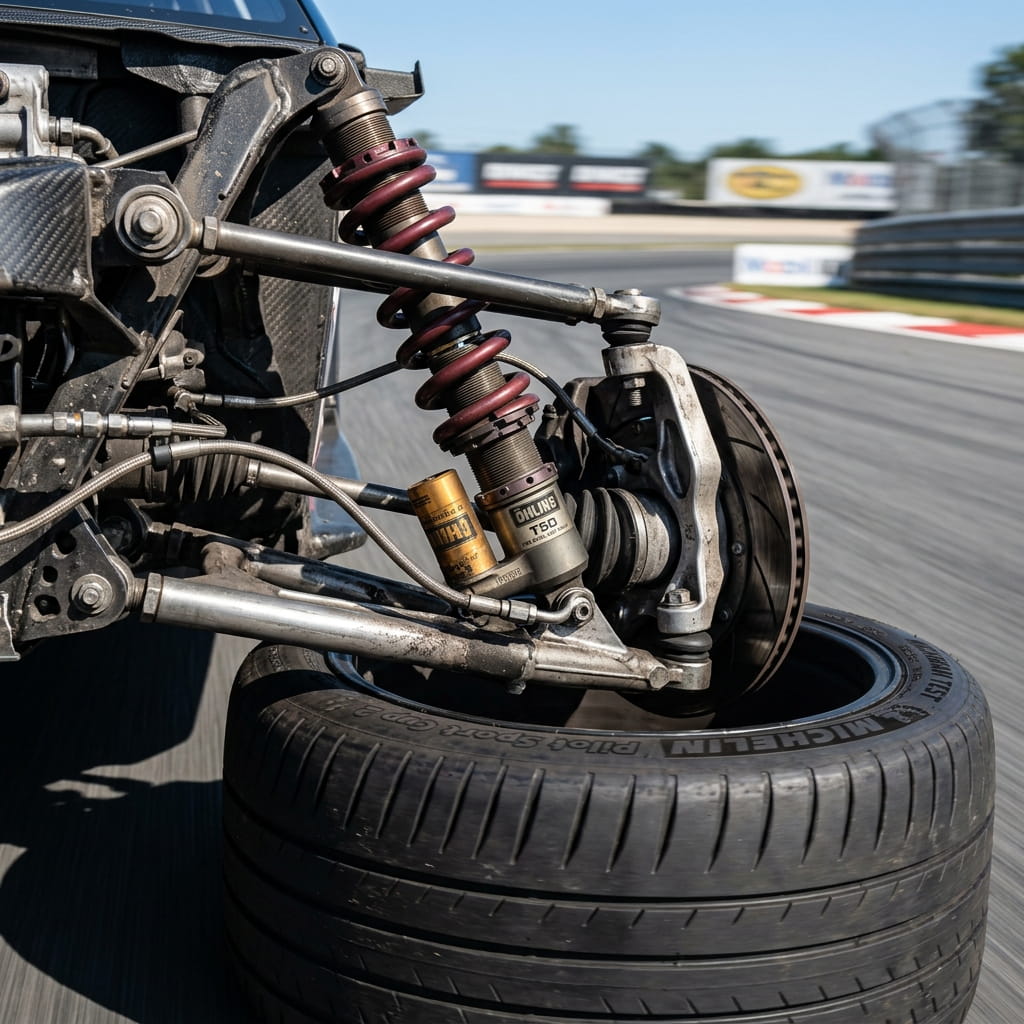
Our engineering team spent two days at the test facility dialing in a brand new shock package for maximum grip and stability. Suspension dynamics dictate exactly how a vehicle interacts with the road surface under high-stress conditions. The goal for this particular track session was straightforward but ambitious. We needed to validate a completely redesigned damping architecture and ensure the theoretical data translated seamlessly to real-world tarmac.
By analyzing every millimeter of suspension travel and chassis roll, the team aimed to unlock higher cornering speeds and highly predictable handling limits. A vehicle is only as fast as the grip it can generate, and the shock absorbers play a pivotal role in keeping the tire’s contact patch glued to the pavement.
The Engineering Process: Precision Meets Performance
Developing a high-performance shock package requires meticulous attention to detail and a rigorous testing protocol. During the two-day session, our technicians systematically worked through a comprehensive matrix of adjustments. The focus was heavily placed on balancing low-speed and high-speed compression, as well as fine-tuning the rebound settings to match the specific spring rates of the chassis.
Gathering and Analyzing Telemetry Data
Modern vehicle testing relies heavily on accurate data acquisition. Throughout the test runs, advanced telemetry systems monitored how the vehicle responded to varying track configurations. This included navigating high-speed sweepers, tight hairpins, and aggressive braking zones.
Data loggers recorded thousands of data points per second. Engineers on the pit wall continuously cross-referenced chassis roll angles, damper velocities, and tire surface temperatures. If a specific setup induced mid-corner understeer, the team quickly modified the internal valving to optimize weight transfer. This rapid iterative loop of driving, analyzing, and wrenching ensured that every suspension adjustment moved the vehicle closer to its absolute performance ceiling.
Iterative Tuning on the Fly
Finding the perfect setup is rarely a linear process. Early runs revealed that while the initial spring rates provided excellent support under heavy braking, the rebound damping was too aggressive for the uneven sections of the track. The engineering crew quickly swapped the shim stacks inside the dampers. Subsequent runs showed immediate improvement, demonstrating the team’s ability to diagnose dynamic issues and implement mechanical solutions on the fly.
Track Results: Securing Superior Grip and Stability
The rigorous effort on the paddock directly translated to measurable improvements on the circuit. The new shock package demonstrated a remarkable ability to absorb track imperfections without unsettling the chassis.
Maximizing the Tire Contact Patch
One of the most significant breakthroughs came in the form of sustained mechanical grip. The revised damping characteristics kept the tire contact patch firmly planted on the asphalt, even when the driver aggressively utilized the curbing. Telemetry data confirmed these observations, showing that mid-corner lateral G-forces increased by a significant margin. This newfound grip allowed for much earlier throttle application on corner exit, a critical factor for reducing overall lap times.
Improved Aerodynamic Platform
Additionally, the improved stability under heavy braking vastly reduced longitudinal pitching. By keeping the vehicle level during deceleration, the aerodynamic platform remained consistent. This allowed the front splitters and rear wings to generate maximum downforce when the driver needed it most. Tire degradation also showed a marked improvement over longer stints. The smoother, more controlled weight distribution prevented localized overheating across the rubber compound, extending the optimal performance window of the tires.
Pushing the Boundaries of Automotive Engineering
Successfully dialing in this new shock package represents a crucial milestone for our vehicle development program. It validates our initial computational fluid dynamics models and proves that our mechanical design philosophy yields tangible, competitive results on the track.
Moving forward, the extensive data gathered during these two days will inform future suspension geometries and establish the baseline setups for upcoming events. We remain completely committed to refining every single component of the chassis. Continuous testing and development are the only ways to ensure our vehicles deliver uncompromising performance and absolute engineering precision.